Showing posts with label bread. Show all posts

Sunday, 19 August 2018

The Bread Bible - Spicy Herbed Breadsticks

It's been so long since I've blogged or baked anything from the Bread Bible. It's really hard to get back into the swing of things but I think I've just got to grasp the nettle, yank off the bandaid and get back on the horse etc, etc. And what better way to start back than with some alien fingers, aka Spicy Herbed Breadsticks. It's so long ago I have almost no memory of making these although I do remember I had to make them in my toaster oven so they're a bit shorter then the recipe suggests. 

They were a bit fiddly (i.e. you have to roll them out and cut them up) which always tests my patience. Also I used semolina to dust the bench when rolling them out and it was probably a bit too coarse (it was just what I had in the pantry). I'm not sure I did justice to the recipe but they were very crunchy and surprisingly spicy (Why a surprise, you ask, given the name? I think it was the degree of spiciness that I didn't expect.) I don't think I'd make them again - if I'm having people over these days I prefer to buy this kind of thing and concentrate on making the main dishes myself. 


Next on the list to try is Mediterranean Matzoh. I like matzoh and I'm sure these would be tasty but they're not yeasty bread...which is precisely why I got stuck at this point in the Bread Bible bake-through list. I intended to skip them but found that difficult too and so here we are at an impasse. Obviously I need some sort of therapy but I think I'll just try and push through, so next up is not bread but cake - Cinnamon Crumb Surprise. My favourite type of cake (apart from all the other types which are also my favourite). See you soon.

Wednesday, 7 March 2018

The Bread Bible: Traditional Challah

Well, here we are finally at the 2018 Bread Bible Bakers' schedule. Only a month behind now if you don't count the Banana Feather Bread I still have to make from the 2017 schedule. I'm not counting it.

The January bread is the Traditional Challah. We made challah early in this bake-through but for the first challah we used the recipe from Rose's website at her suggestion. The first recipe uses a biga which sits for three days in the fridge and, since I didn't need it to be pareve, I used butter rather than oil.

January's Traditional Challah uses an overnight starter and a great many eggs (5). I used oil instead of butter this time since I thought I should try the traditional pareve version. It is also moistened by quite a lot of honey although I ran out and topped it up with some golden syrup I had on hand. (you know things have got completely out of hand in your kitchen when you find yourself with two containers of golden syrup)

Although it was quite some time ago that I made the first challah, I still remember how soft and moist it was. The second challah did not compare as favourably. Although it was quite soft and had a lovely flavour, it didn't have that brioche-type softness of the first. I have to say, this didn't stop one of my colleagues commenting on the delicious smell as I toasted a piece for second breakfast one morning.

Rose suggested we use the website recipe specifically because it was 'new and improved' on the Bread Bible recipe. However I suspect that the use of butter instead of oil would also make a difference to the Bread Bible recipe.


Since I had already tried out the four strand challah shape I made a slightly smaller three strand loaf and a one strand loaf. The four strand is more spectacular but the three strand is pretty good. I had to fit it in my toaster oven so it doesn't have the desired tapering at the ends. 

I forgot to take a photo of the one strand loaf. I really like this shaping method - it was satisfying in the way that cleverly designed packaging is (or maybe that's just me).

I also forgot to keep on eye on the larger loaf and just caught it before it went from burnished umber to undeniably burnt. One thing I'm wondering, after my two attempts at challah, is why I get those striations on the dough - they happen when I'm rolling out the strands of dough before I plait them. Perhaps I'll go and google it.


The February bread is Spicy Herbed Breadsticks which I hope I get done before the end of March :) You can have a look at how the other bakers went over here.   

Monday, 5 March 2018

The Bread Bible - crumpets

If you hadn't read the title of this post you might wonder what the blob in the photo is. It was meant to be a crumpet. I've made these before with modest success during the bake-through of the Baking Bible. This recipe is from the Bread Bible and the main difference between the two is, as Rose notes in the introduction to the crumpet recipe in the Baking Bible, there is more liquid in the latter. (Although I didn't read that until after I'd attempted these crumpets.)

This is obvious when you make the Bread Bible crumpet batter which, for me, was more like a loose bread dough. It certainly didn't 'pour' into the crumpet rings. I used the scalded milk option for liquid in this recipe instead of the alternative low fat milk powder and water. I'm not sure if this affected the density of the batter also. 

The good news is that despite the slightly more bready than crumpety texture of the crumpets they were extremely tasty (straight out of the frying pan with  bit of butter). This is an extremely easy recipe (liquid issues not withstanding) requiring only patience while the batter proofs a couple of times.


This post was a catch up (I'm in perpetual catch-up) for Rose's Bread Bible baking group. Have a look at the main baking group website to see how the others are going. I've made the January Traditional Challah (post coming soon) and am next on to February's Spiced Herb Breadsticks.

Thursday, 6 July 2017

The Bread Bible - Walnut Fougasse

I tried to make Walnut Fougasse and instead I modelled the face of a seven-eyed alien - potentially the next Dr Who nemesis (Evil Dr Fougasse, perhaps?). Apt since I wasn't overly taken with this bread. I'm not sure if I did something wrong but the dough had an odd texture when I first mixed it. It improved upon proving but the process was finicky and then I found the end result too rich and greasy for my taste. So, unfortunately not a success for me, which was a shame because it looked and sounded so exotic.

I ate some with pea and ham soup I had in the freezer (the soup was in the freezer because I wasn't overly taken with it when I made it...). While not the best meal I've ever had I did achieve that virtuous feeling you get when eating two homemade things you're not that fussed about.


I'm way behind the Bread Bakers schedule but I think I'm up to pizza next. Yay!

Wednesday, 2 March 2016

My kind of (Chocolate Hazelnut Mousse) Tart

This is my kind of tart. Hazelnuts, chocolate, cream cheese, praline. Could there be a better combination?

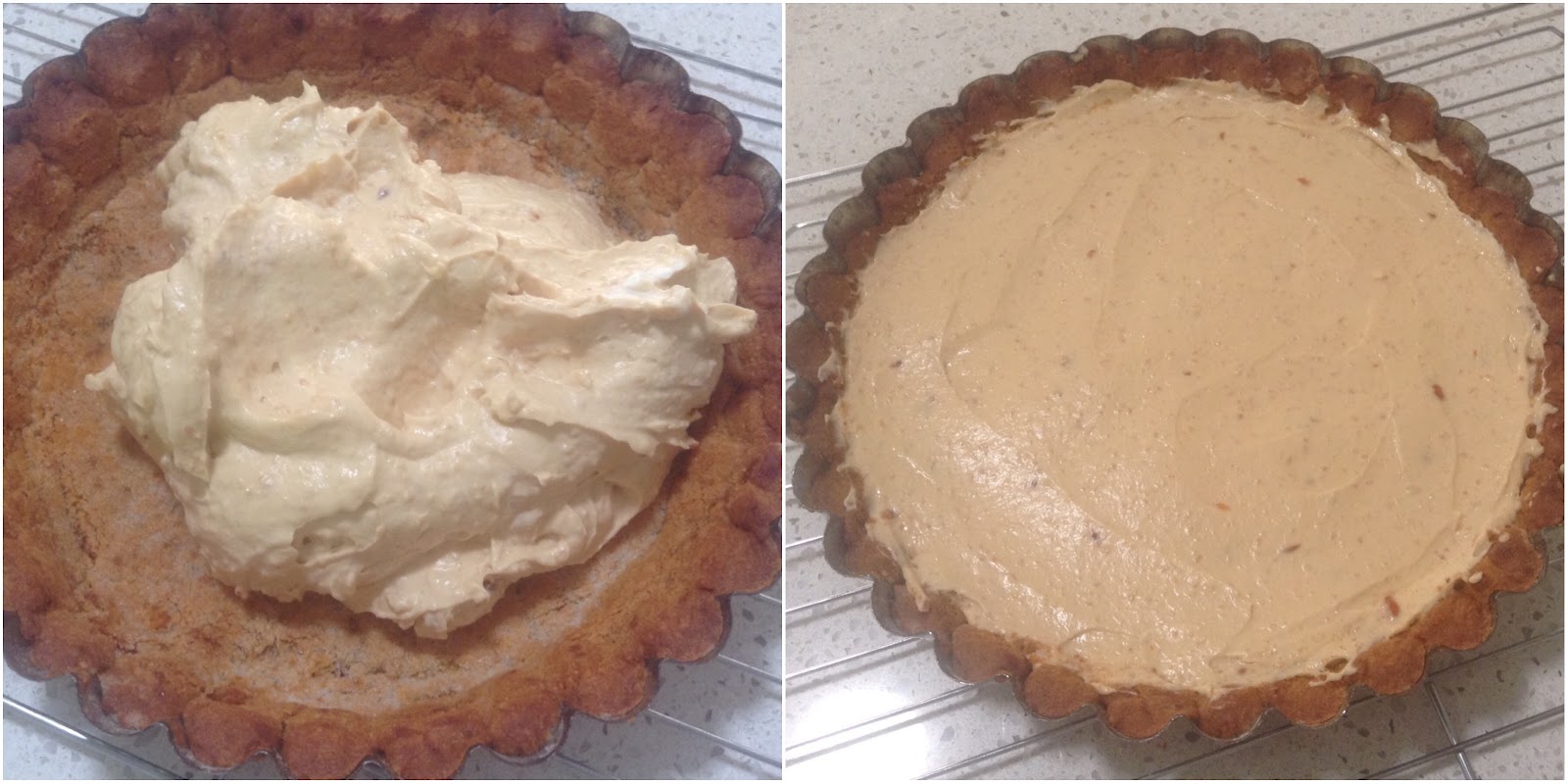
Hazelnut and chocolate are one of my favourite food matches. In this tart it's combined richly but not excessively sweetly with a creamy cheesecake-type filling and topped with a chocolate Frangelico ganache. It is absolutely delicious and not at all tricky or time consuming (I know! Hard to believe, huh?).


This recipe calls for shop-bought hazelnut praline paste. I have never heard of or seen such a thing (that I can remember) so I made some praline and added in a bit of oil to make it into a paste, as Rose suggested. (Yes I made toffee and it went fine.)

I had a moment of panic in my local small supermarket when I thought they were out of blanched hazelnuts. Lucky I found the last lonely packet on the shelf. Let's hope they stock up again. Otherwise future projects will be made with hazelnuts with skins because there is no way I'm standing over a pot of boiling hazelnuts. I have my limits.

Actually I needed more than one packet but I manage to eek it out to make enough praline for the tart base and the mousse filling. 


I was surprised that the base worked so well since the mixture turned out so wet. It seemed pretty unlikely that I'd be able to press it into the tart tin smoothly but, lo and behold, it worked! I was just congratulating myself (well the cat doesn't provide much positive reinforcement) when I noticed that some of the sugar in the small processor bowl had whizzed itself out into the big bowl during the base whizzing procedure. It was quite a lot. Damn. I gingerly peeled off the gladwrap, sprinkled the recalcitrant sugar over the base and sort of massaged it in with a fork. I could have taken out the mixture, mixed it in properly and put it back but somehow that didn't seem like an attractive option... 

Amazingly it seemed to be okay. The gods of cooking were feeling kind that day.


After last week's mediocre efforts I tested the oven and found the heat was fluctuating. I monitored the heat while I baked the base and it may have overcooked a little on the sides but it was mostly fine. It's quite an unusual base - a wet mixture, a cakey texture when baked, and then you press it down to compact the puffiness. 


The mousse filling was so ridiculously easy to mix I even had the energy to put the beater blades in the fridge to cool before whipping the cream.


Mmmm, looks delicious. I wonder how it'll taste? And, more to the point, I wonder why the Frangelico bottle is wearing that rather snazzy rope belt? Does everyone's Frangelico bottle sport the same natty (knotty) nautical style?


I didn't make the chocolate ganache by Rose's exacting and probably superior method. Instead I blasted the chocolate and cream at intervals in the microwave and stirred. It looked pretty good. And anyway there was Frangelico.


Next week the Alpha Bakers are making Coconut Cupcakes with milk chocolate ganache.

Monday, 22 February 2016

Pretzel Bread

This month the Bread Bible Alpha Bakers are making pretzel bread. They're meant to be little pretzel-type bread rolls. I didn't really want to post the picture of my finished pretzel breads rolls because they look so unpretzel-like and not a lot like rolls. I think this is mainly because I didn't dip them in a solution of lye before I baked them. The alkaline solution apparently is what makes them dark and chewy. I wasn't keen to use lye because it's so caustic but I was intending to try using baking soda instead as suggested by Alpha Baker Marie. In the end I just brushed them with egg white, an alternative suggested in the recipe. I'm not sure what else went wrong because they didn't really rise much in the oven and when I cooked them a bit longer they just got harder. I should try them again sometime when I have more time because some of the other Alpha Bakers got really good looking results.


The process wasn't hard at all and not very time consuming compared to a lot of the breads we've made. The ingredients are kneaded in the stand mixer then left to rise for a shorts period.


The dough is divided into twelve little balls and then shaped.


Mon petit escargot! They look like little snails at this stage but it sounds better in French.


The snails rest for a while after which they turn into slugs.


I baked them as directed  but I'm not sure what happened because they didn't look too good. They made nice little snacks anyway.

Next month the Bread Bible Bakers are making New Zealand Almond and Fig Bread.

Thursday, 14 January 2016

A golden Sweet Potato Loaf

This is my third post this week and I think I'm almost all posted out. But I'll soldier on because there's a good-looking loaf below that's just asking to be introduced. The Sweet Potato Loaf is the January Bread Bible recipe. It's a plain white loaf enlivened with the addition of some mashed sweet potato. This was a nice loaf although I thought it was tastiest when I toasted it rather than fresh.

I was pleased with the way it looked when it came out of the oven but I was disappointed once I tried it, because the texture was a bit crumbly.  I had previously noticed that the two wholemeal loaves the Alpha Bakers made out of the Baking Bible have been a bit crumbly too (my loaves, that is, not the other bakers'). A google search suggested that crumbliness can be caused by not enough kneading (and therefore not enough gluten production), plus other things like over-proofing or proofing at too high a temperature. Gluten formation can also be affected by the level of protein in the flour. I suspected my problem was not-enough-kneading and/or proofing issues.


Challah biga keeping company with Sweet Potato Loaf sponge. The next big names in cartoon characters perhaps?


I started the Challah and the Sweet Potato Loaf at the same time but the loaf was finished that day unlike the Challah. Once the sweet potato is roasted (which took what seemed a very long time) it was a simple process to mix and knead in the stand mixer.


When the dough is initially mixed it looks a bit unlikely. Mine had little lumps of sweet potato. They disappeared after the longer kneading period as you can see a couple of photos down. I would have found the lumps 'charming' if they'd remained. 


You can see in the photo below that, after kneading, the dough looked like it had some gluten development (to my unpractised eye). But I didn't look at it particularly carefully, just relying on the timing the recipe gave for kneading in the stand mixer. When I was making the Challah (the day after this loaf) I tried the 'windowpane test' to check the gluten. I'm not saying I knew what I was doing but it did prompt me to knead it for a bit longer. I'm planning on keeping a more careful eye on the state of the dough after kneading.


In future I'm also planning to keep a more careful eye on the dough while it's proofing - particularly making sure that I put it to rise in an area that isn't too warm. Although, I tried this with the challah and then promptly got distracted and returned too late to check it, only to find the dough spilling over the top of the container. Luckily the challah seemed not to be affected by this neglect.


The dough was a lot more yellow than the photo shows. It was a definite orangey golden colour.


You can't see the crumbly texture here. The loaf cut nicely but the slice fell apart quite easily on eating. It still made pretty tasty toast.


In February the Bread Bible Alpha Bakers are making Pretzel Bread.

Tuesday, 12 January 2016

Challah

Challah is another type of bread I'd never eaten before I made it this week (belatedly) for the Alpha Bakers' December Bread Bible project. I'm familiar with it from TV, films and books and have always thought of it as the bread that takes a central place in Jewish rituals. I had no idea it was a semi-sweet enriched bread rather than just a rather fancy plaited white loaf. That was a lovely surprise (although fancy plaited white bread is not to be sneezed at either). In fact I loved everything about making this bread and eating it as well. You'll see there's quite a lot of photos of the bread in its plaited state since I was mesmerised by how fantastic it looked, and that I made it!.*

*It may not be the best challah ever but it's my first and looks pretty good to me.


This bread starts, like many of Rose's other breads, by making a biga - a small piece of dough which ferments and develops flavour for up to three days in the fridge. I left mine for one day because I had to fit it around other commitments. It didn't look very big when I took it out of the fridge but it smelled yeasty and weighed exactly the amount the recipe stated it should. 


I used butter rather than oil in my challah, as Rose suggests if you don't need it to be pareve. The recipe most of the Alpha Bakers made was actually the one on Rose's website rather than the Bread Bible recipe. Rose suggested this since she has improved the recipe since the Bread Bible was published.


I can't imagine that I'll ever get blasé about the sensuousness of bread dough. And it's amazing that this silky, vibrant dough  emerges from the initial lumpy mix you see above.


Thankfully the Bread Bible includes step-by-step pictures to help the novice baker plait the four strands of dough (that's right, four!). I'm not sure if you've ever tried bobbin lace-making? It's a lot like making this plait (only with tiny thread and a dozen-plus bobbins).


I had to squish up the ends of my plait a bit to fit it into my little oven. It didn't seem to do any real damage. I call it 'shaping the loaf'. Look at those curves.


Isn't she beautiful?


And soft and delicious.


January's Bread Bible bread is Sweet Potato Loaf which I've made and will be posting about later this week.

Wednesday, 23 December 2015

Summer holidays and the start of Cranberry Christmas Bread...*and finished

So, poor old phylliscaroline has been a bit lonely for a few weeks while I struggled through the traditional pre-Christmas end of year work, social and biscuit-making frenzy. Then I suffered through the traditional holiday earache. Okay that's not a tradition, but it did mean that I spent a lot of time in bed with a hot water bottle on my ear, and missed making two pies (*and a cake as well) with the Alpha Bakers. I've come South for Christmas with family again this year so at least while I was sick I was surrounded by the beauty of my parent's garden and some beautiful summer weather. 


And this is as far as I've got with the Cranberry Christmas bread. Yes I'm only at the beginning biga stage, staring hopefully at the starter, looking for movement. (And now that I'm away from it, I must say one thing about the humidity of Darwin is that you never have to worry about whether the room is warm enough for fermenting yeast.) I'm working with different ingredients in an unfamiliar kitchen so I guess we'll see how it goes. I'll update the post once I've baked the bread, hopefully tomorrow afternoon.


Update* 

It was quite a challenge to get this finished in between watching Star Wars, last minute shopping and Christmas Eve dinner preparations. But I managed to follow the steps...


Et voila! It may be a bit dry (probably better tomorrow) but very nice with blue cheese. It will be a nice addition to the cheese plate for Christmas lunch.


Next week the Alpha Bakers are cooking White Christmas Peppermint cake.

Thursday, 12 November 2015

Half a sugar rose brioche

I read Alpha Baker Kimberlie's early post on making the Sugar Rose Brioche just as I started making mine. I saw she had made double the brioche dough recipe and thought, 'that's a good idea, I should have done that'. Then while my loaf was baking I read Marie's post and realised I really should have done that. I completely missed the instruction to double the dough recipe. This explained why I had such a good covering of sugar and cinnamon and why I thought my loaf would never rise enough to fill up the cake tin specified in the recipe. And it was lucky I realised in time that my loaf probably didn't need the whole cooking time since it was half the size. 

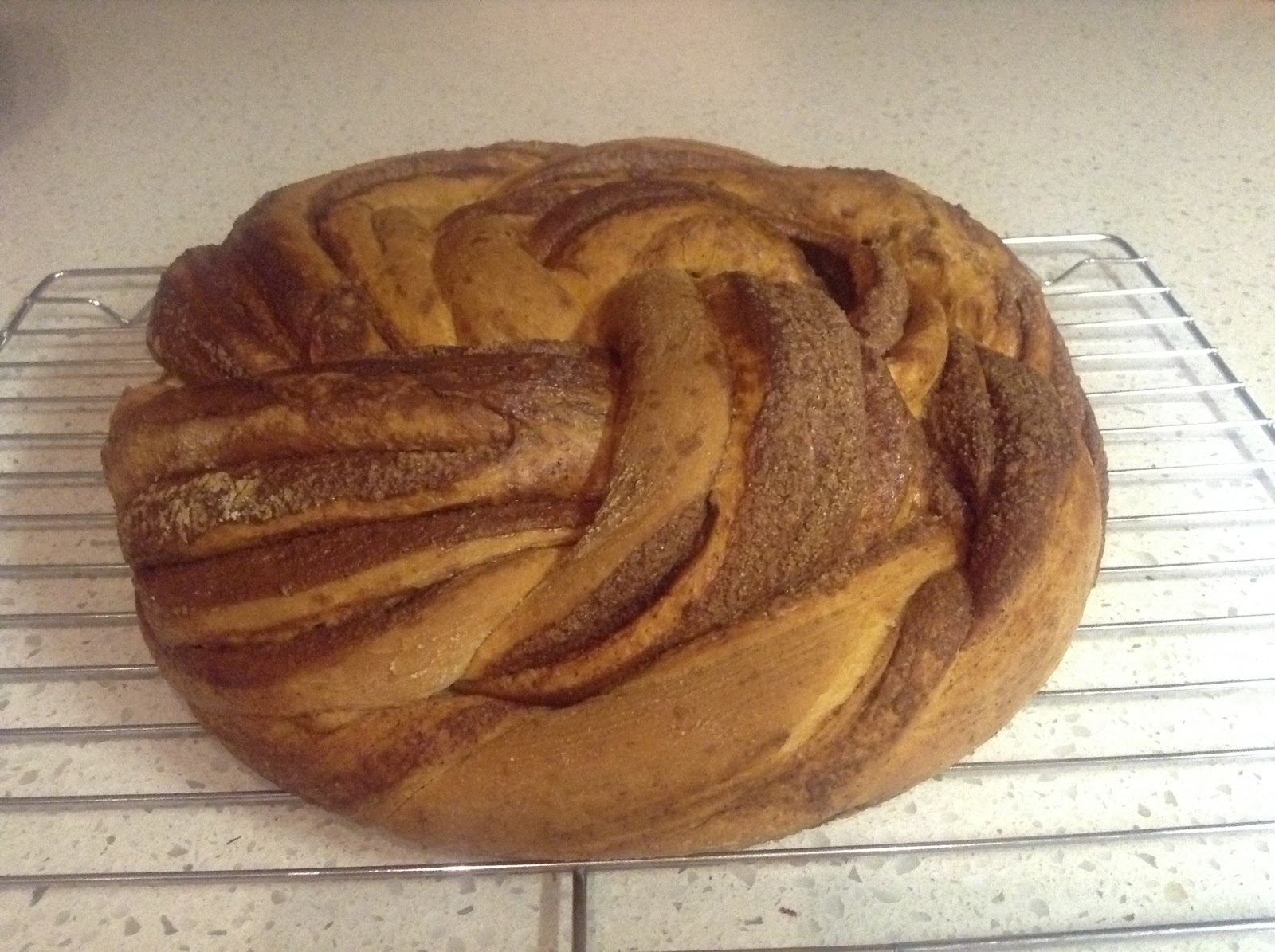
The loaf was still a little dry because I hadn't rescued it quite early enough. However it was extra sweet and cinnamony from the accidental double spice amount and it made delicious toast. This was fun to make and not as difficult as you might think to get that twisty shape. I also liked the texture this time although often I prefer more structured bready textures to brioche. 


Here I submit the evidence that I strained the egg AND the sugar and cinnamon. And I was rewarded for this unusual meticulousness by a shower of cinnamon all over the kitchen. You would be amazed how far the dust flew from those few teaspoons of spice.


I used quite a bit of flour to dust the dough since we're at full strength heat and humidity at the moment in Darwin and both the dough and I were sweating as soon as I took it out of the fridge. I can't tell if it made a (negative) difference to the dough. It seemed fine to me.


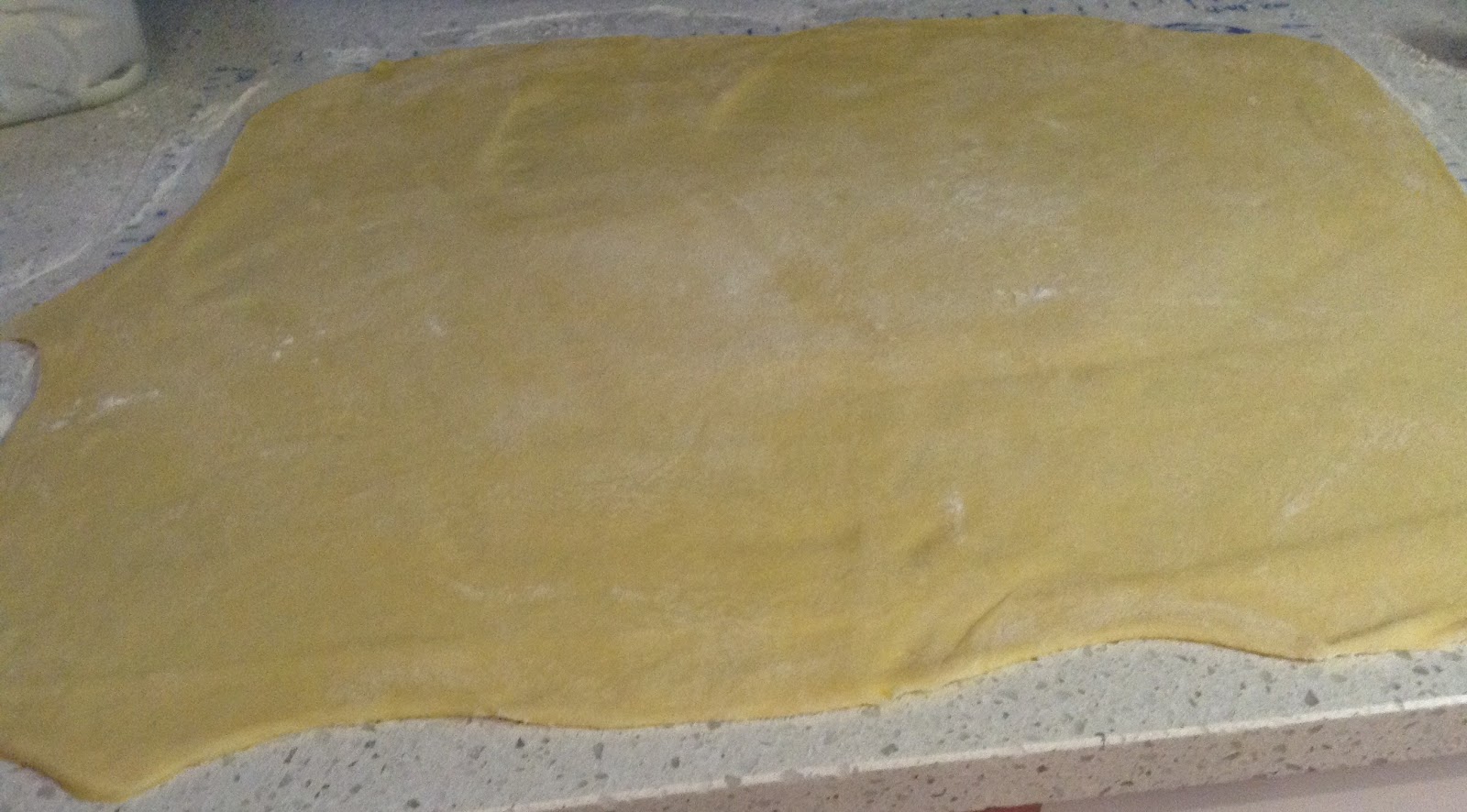
This is a circle of dough. I mean it is meant to be a circle even though it looks a lot lik a wonky rectangle. I managed to roll it out to the approximate size that was specified for the double recipe so once I rolled it up my swirls must have been a lot closer together then the full recipe. When we're talking more sugar and cinnamon to the crumb-age, I can't see any negative here.


I thought to myself as I was sprinkling, 'this recipe gives really good coverage of the sugar and cinnamon...'.


I rolled crossways from the corner of my rectangle to trick it into becoming a circle. 


The final cutting and shaping process for the loaf was a little intimidating. I managed to get through the cutting and twisting steps more or less okay, with just a few 'what?!'...'oh', moments. But when it came to the final curling of the dough onto the cake tin, I felt like I was playing twister, with all my limbs involved in holding pieces of dough, while simultaneously looking at the instructions. Only to find them lacking an explanatory picture for that crucial step. So many other photos, why none of the final shaping of the loaf?! On the other hand I have no photographic evidence of that step either (no more limbs to operate the camera) so maybe I shouldn't point the wooden spoon.


This made a pretty large loaf even with half the dough, so I imagine the full size must have been pretty big. It is a pretty impressive loaf which requires more patience and time than high level skills. It would make an eye-catching contribution to a breakfast or morning tea, even at half the recipe.


Next week we're making Hazelnut Praline Cookies.